The ROI of Custom Automation: Why Investing in Tailored Software Beats Generic Subscriptions Every Time
- 5 days ago
- 5 min read
Every month, you write checks for software subscriptions that promise to solve your business problems. CRM platforms. Project management tools. Workflow automation suites. The list grows longer, the costs stack higher, and yet your team still spends hours each week on manual workarounds, data transfers between systems, and tasks that should have been automated years ago.
Here's the uncomfortable truth: generic software subscriptions are designed to serve everyone, which means they serve no one perfectly. Your business has unique processes, specific challenges, and proprietary workflows that off-the-shelf solutions will never fully address. And every day you settle for "good enough" software, you're leaving money on the table.
Custom automation and tailored application development represent a fundamentally different approach: one that transforms technology from a recurring expense into a competitive asset with measurable, compounding returns.
The Real Cost of Generic Solutions
When you subscribe to standard software, you're inheriting someone else's vision of how your business should operate. Your team adapts their workflows to fit the tool's limitations. You pay for features you'll never use. You tolerate gaps in functionality because "that's just how the system works."
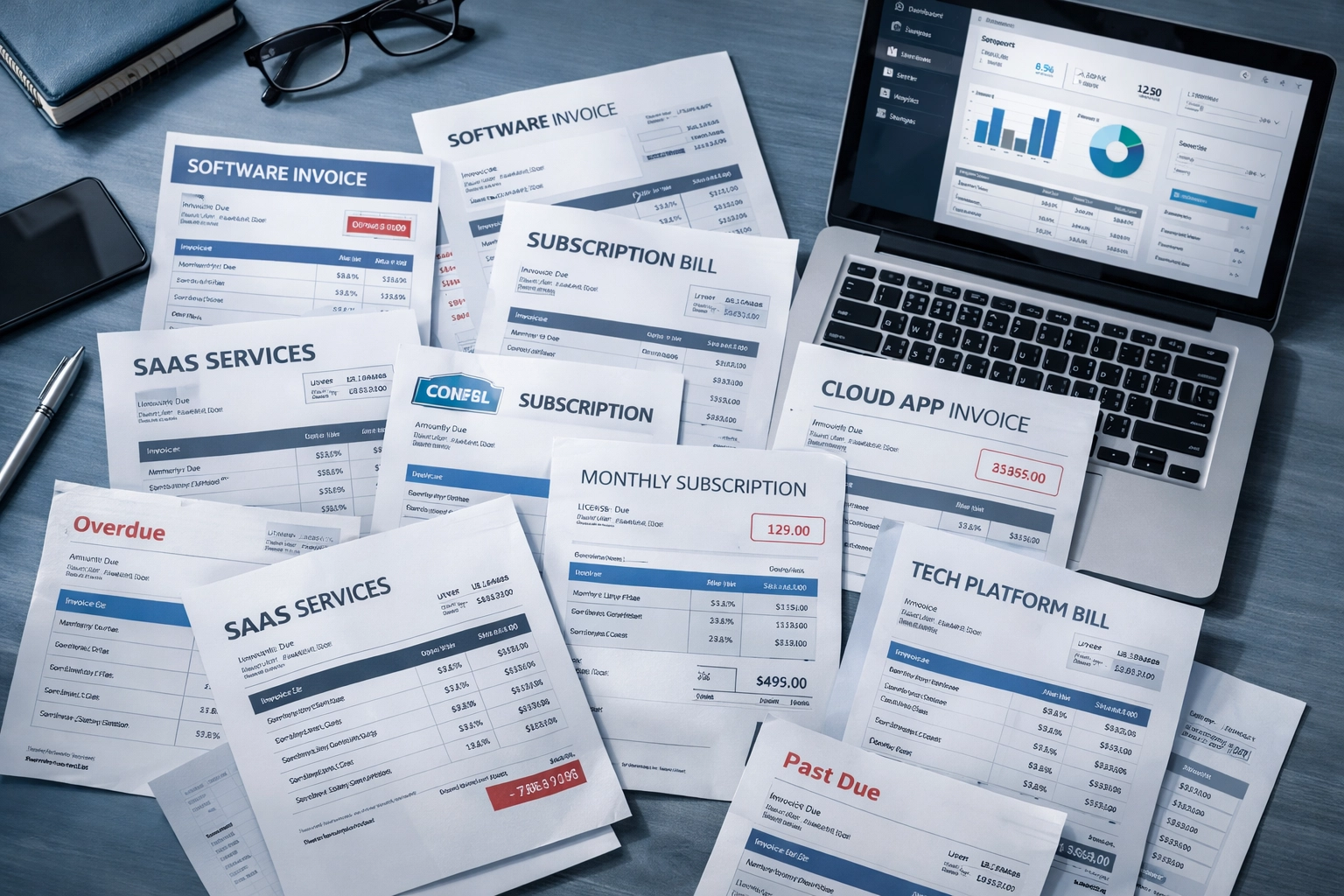
This adaptation tax is invisible but expensive. Consider the hours your team spends each week transferring data between systems that don't integrate properly. Calculate the opportunity cost of deals that slip through the cracks because your CRM doesn't track the specific metrics that matter to your sales process. Add up the time wasted navigating interfaces designed for generic use cases rather than your team's actual daily tasks.
Generic subscriptions force your business to conform to their limitations. Custom automation does the opposite: it conforms to your business, amplifying your unique strengths rather than constraining them.
Measurable ROI That Transforms Operations
Custom automation delivers returns that generic solutions simply cannot match because it targets your specific operational challenges with precision-engineered systems. The financial impact is both immediate and compounding.
Real-world implementations demonstrate the scale of these returns. Organizations that invest in custom automation solutions consistently see production increases of 30% or more, dramatic reductions in error rates, and labor cost savings that often exceed six figures annually. One documented case showed a custom system generating an additional $8.6 million in annual profit against a $7 million total solution cost: achieving full ROI payback in under ten months.
These aren't exceptional outcomes. They're what happens when technology is built specifically for your operational reality rather than adapted from generic templates.
Your custom solution understands your data structure, speaks your business language, and automates the exact processes that create bottlenecks in your workflow. It eliminates the manual data entry that generic systems require. It generates the reports your leadership actually needs rather than forcing you to export data and rebuild analytics in spreadsheets. It triggers actions based on your business rules, not someone else's assumptions about how companies should operate.

The Flexibility Advantage
Markets shift. Regulations change. Your business evolves. Generic software subscriptions respond to these changes on their timeline, not yours. Feature requests disappear into support ticket systems. Updates arrive months or years after you need them: if they arrive at all.
Custom applications give you control over your technology roadmap. When your business requirements change, your development partner adapts the system accordingly. New integrations can be built when you need them, not when a SaaS vendor decides to prioritize them. Features can be added, modified, or removed based on real usage data from your team rather than popularity votes from the vendor's entire customer base.
This flexibility compounds in value over time. A generic subscription might serve your needs adequately in year one. By year three, you're paying for a system that no longer aligns with how your business actually operates. Custom solutions grow with you, becoming more valuable as they accumulate years of refinements tailored to your evolving processes.
The redeployment advantage matters too. When product specifications change or new opportunities emerge, custom systems can be retooled and extended rapidly. Generic platforms frequently lock you into rigid structures that require expensive workarounds or complete replacement when your needs shift beyond their original design parameters.
Hidden ROI Factors That Compound Returns
The most significant returns from custom automation often come from improvements that don't appear on standard ROI calculators.
Employee productivity and satisfaction represent quantifiable but frequently underestimated benefits. When you automate repetitive, frustrating tasks, your team focuses on work that actually requires human judgment and creativity. This isn't just about efficiency: it's about retention. High-performing employees don't leave companies where they spend their days on meaningful work instead of manual data entry.

System integration represents another hidden value driver. Generic subscriptions rarely integrate seamlessly with your entire technology ecosystem. Custom applications are built from the ground up to work with your specific systems, eliminating the data silos and manual transfer processes that plague businesses running multiple disconnected platforms.
The reduction in unplanned downtime delivers substantial value too. Custom systems enable preventative maintenance during optimal periods rather than forcing emergency fixes during critical business moments. When you control the technology, you control the maintenance schedule.
Security and compliance advantages matter increasingly in 2026's regulatory environment. Custom applications can be engineered to meet your specific security requirements and compliance obligations from day one, rather than hoping a generic vendor's standard features adequately address your industry's unique regulations.
De-Risking Investment Through Proof of Concept
The prospect of investing in custom development understandably raises questions about risk and validation. This is where the Proof of Concept approach transforms custom automation from a leap of faith into a data-driven investment decision.
A well-structured POC phase allows you to validate ROI projections before committing major capital. You identify technical hurdles and integration challenges in a controlled environment. You gather real performance data from your actual workflows. You refine requirements based on user feedback before the full build phase begins.
This staged approach means you're not betting the farm on theoretical benefits. You're investing incrementally, validating assumptions at each stage, and building confidence in the projected returns before scaling the solution across your organization.
The upfront POC investment pays for itself many times over by reducing risk, generating more accurate ROI projections, and optimizing resource allocation in the full development phase. You learn what works, what needs adjustment, and what delivers the highest value before building the complete system.

Building Your Competitive Advantage
Generic subscriptions are available to everyone, which means they create no competitive advantage. Your competitors use the same CRM, the same project management tools, the same automation platforms. You're all working within the same constraints, playing by the same rules.
Custom automation changes the game. It captures your institutional knowledge, codifies your best practices, and automates your unique processes in ways your competitors cannot replicate. The system becomes a strategic asset that compounds your competitive position rather than a commodity expense that simply keeps you in the game.
This matters more in 2026 than ever before. AI capabilities are reshaping every industry, and the businesses that thrive are those that embed intelligence into custom systems tailored to their specific operational reality rather than hoping generic AI features eventually address their needs.
The Path Forward
The decision isn't between custom automation and generic subscriptions. It's between building technology that amplifies your competitive advantages or settling for systems designed for everyone else.
Start by identifying your highest-value automation opportunities: the processes where generic solutions fail, where manual work creates bottlenecks, where small efficiency gains would compound into substantial returns. These are your proof of concept candidates.
Pyramid Technology Service Group partners with businesses to transform operational challenges into competitive advantages through custom automation and application development. We don't sell off-the-shelf solutions because your business doesn't have off-the-shelf challenges.
The ROI of custom automation isn't theoretical. It's measurable, substantial, and compounding. The question is whether you'll continue paying monthly subscriptions for software that almost meets your needs, or invest in systems that deliver exactly what your business requires to scale, compete, and win.
Your competitors are making this choice right now. What will yours be?
Comments